In the field of interior design, shadow gap skirting is also a popular design approach.
Simply put, it's not about installing a traditional baseboard at the bottom of the wall, but rather intentionally leaving a narrow gap between the wall and the floor, allowing light to naturally fall into it and creating a soft shadow line.
From a distance, the wall appears to float lightly above the floor, making the space appear cleaner, more restrained, and more modern.
Because of this "invisible baseboard" design, shadow gap skirting often appears in minimalist, contemporary, or architecturally inspired spaces.
Of course, it's not all good—there are certain considerations regarding construction, maintenance, and suitable spaces.
Next, we'll discuss why it fascinates designers and what its advantages and limitations are.
Advantages of shadow gap skirting
Some homeowners and designers prefer shadow gap skirting
because:
1. Minimalist Modern Visual Effect
The most captivating aspect of shadow gap skirting is often that almost invisible slit.
Leaving a small gap between the wall and the floor allows light to fall naturally, creating a soft shadow line. Thus, the heavy boundaries of traditional baseboards subtly disappear, replaced by a clean, restrained, and modern visual effect.
This is why designers are increasingly favoring this quiet yet powerful detail in minimalist, Scandinavian, or contemporary spaces.
2. Make a Space Appear Higher and Larger
Shadow gap skirting has a subtle magic—it makes a space appear taller.
Observe closely, and you'll notice that the thin shadow line makes the wall seem to gently lift off the ground, creating a subtle sense of "floating."
Thus, the visual boundaries are subtly widened, making the walls appear more upright and the space lighter and more open. Especially in small spaces with low ceilings, this detail often brings unexpected visual extension.
3. Enhancing Spatial Layers and Lighting Effects
The unique aspect of shadow gap skirting lies in the subtle interplay of light and shadow. As natural or artificial light changes, the narrow gap casts a soft shadow, adding a delicate layer of depth to the otherwise smooth wall surface.
Thus, the wall is no longer just a backdrop, but rather a detail imbued with architectural significance, lending the space a sense of depth and rhythm within its tranquility.
4. Concealing Structural Details and Wiring
The cleverness of shadow gap skirting lies in its ability to conceal many less-than-elegant details subtly. Electrical wires, pipes, and even expansion joints in the floor can all be hidden within that thin shadow gap.
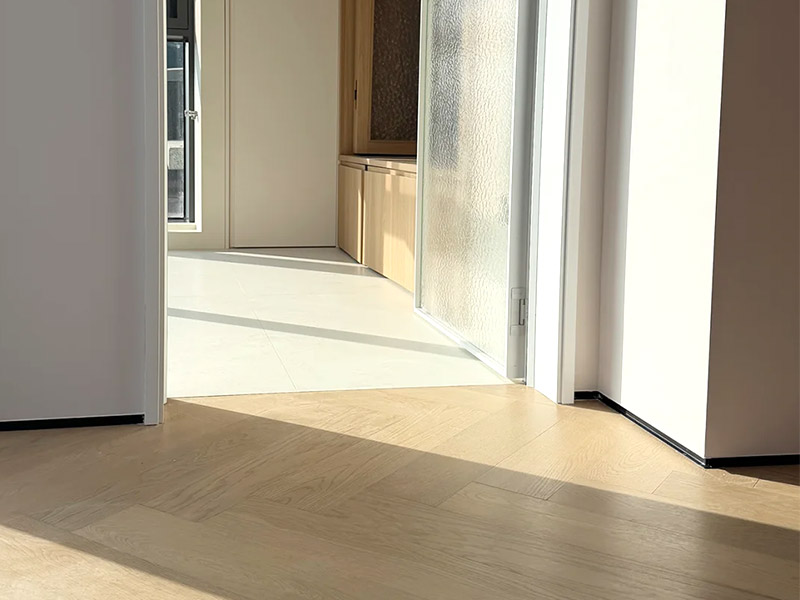
Disadvantages of shadow gap skirting
While Shadow gap skirting offers impressive visual effects, it also has some significant limitations:
1. High Construction Difficulty
Shadow gap skirting may seem simple, but it's not.
It typically requires pre-drilling grooves in the wall or installing specialized profiles, demanding a high degree of precision in the installation.
If the wall surface isn't perfectly flat or if there are slight deviations in dimensional control, the shadow line that should be straight and crisp can become uneven.
2. Higher Installation Costs
The minimalist look of shadow gap skirting often comes with higher installation costs.
Compared to traditional baseboards, it requires additional metal profiles, pre-embedded structures, and more meticulous installation steps.
The increased use of installation materials and the more sophisticated craftsmanship naturally translate to higher labor and budget investments.
Therefore, that seemingly understated shadow line actually hides considerable care and cost.
3. Strict requirements for wall construction
Shadow gap skirting actually places more demands on the wall surface than you might imagine.
The wall must be perfectly flat and straight; otherwise, the thin shadow line will easily become uneven, even appearing wavy.
More importantly, shadow gaps tend to amplify any small cracks or structural deformations in the wall.
4. Difficult to clean and maintain
Shadow-gap skirting exudes sleek minimalism, but those tiny grooves have a secret: dust loves to hide there. This will add some trouble to your daily cleaning.
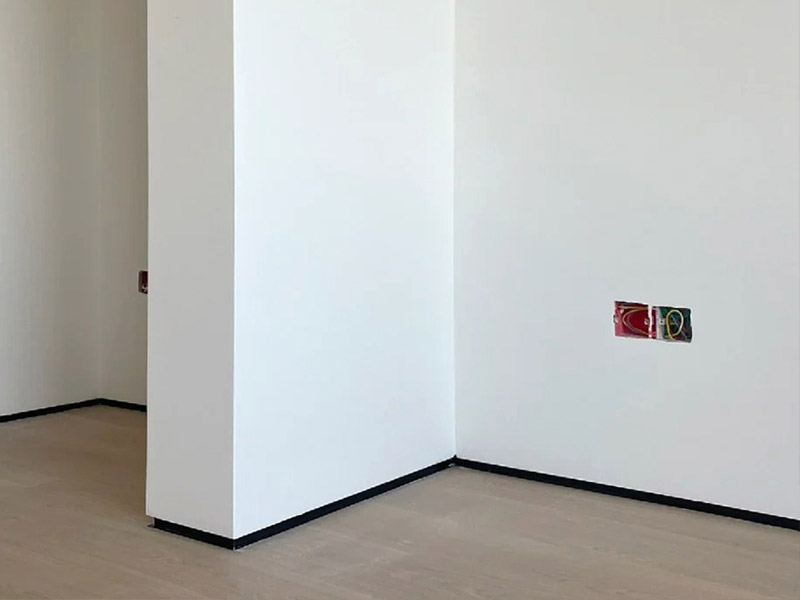
Conclusion
Shadow gap skirtings are an understated declaration of minimalist aesthetics: clean lines and concealed joints subtly elevate the style of a space.
Of course, they require more effort to clean, but their sense of sophistication and neatness make them an essential detail for those seeking a refined home.
FAQS
Q1: What is shadow gap skirting actually?
It's a minimalist detail where a small recessed gap is created between floor and wall, giving a floating, clean‑lined appearance.
Q2: What are the main advantages of shadow gap skirting?
A2: It creates a sleek, modern aesthetic, reduces visual bulk, can make rooms feel larger, hides floor expansion gaps, and enhances lighting play.
Q3: What are the disadvantages of shadow gap skirting?
A3: Installation can be complex and costly; the recessed gap easily collects dust, offers little wall impact protection, and needs precision planning.
Q4: Is the shadow gap skirting hard to clean?
A4: Yes — the narrow grooved gap collects dust and debris more than traditional skirting and often needs a fine brush or vacuum tool to keep clean.
Q5: How much does shadow gap skirting cost compared to standard skirting?
A5: The installation cost of shadow gap skirting is more expensive.
Q6: Can shadow gap skirting be retrofitted in existing homes?
A6: It’s possible but often difficult — wall‑recessed styles require early planning or renovation; retrofitting without damage can be challenging.
Q7: Is shadow gap skirting suitable for all interior styles?
A7: Best for minimalist, contemporary, or modern interiors; it may look too stark or out‑of‑place in traditional or ornate settings.
Q8: Does shadow gap skirting protect walls from damage?
A8: No — unlike traditional baseboards, it offers minimal impact protection, so walls may be more vulnerable to knocks.
Q9: Are there different types of shadow gap skirting?
A9: Yes — options include floor‑gap, wall‑recessed, and dual‑gap designs, each with different visual effects and installation needs.
Q10: Should I hire a professional for installation?
A10: Absolutely — precision is crucial; uneven gaps ruin the desired look, so skilled installers are recommended.