Have you ever noticed that quiet line you step over when entering a room? It’s easy to miss, yet it gently shifts you from one space to another—wood to tile, inside to out.
That subtle detail? It's a threshold strip, quietly shaping how a space feels.
Are you familiar with threshold strips?
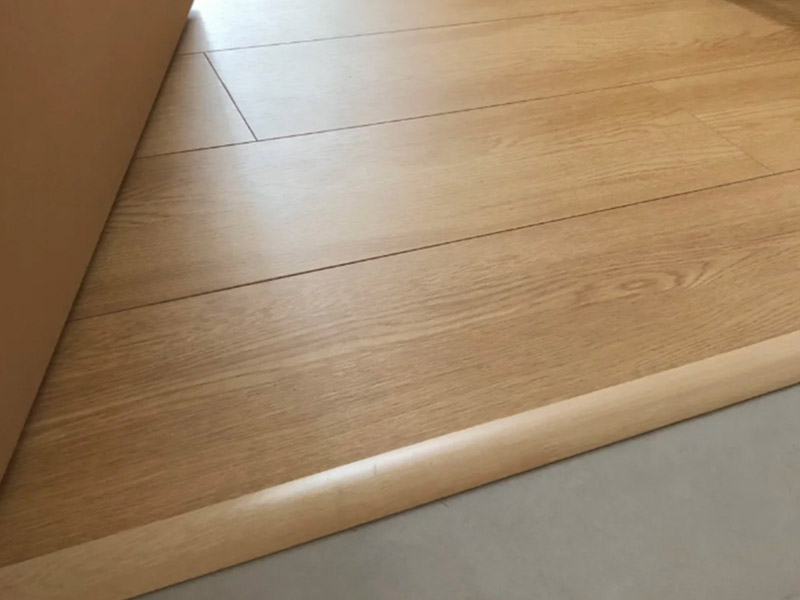
A threshold strip is that slim, almost unnoticed piece that sits where two floors meet. It connects different materials, covers gaps, softens height changes, and leaves a clean finish behind. Think of it as the quiet detail that makes two surfaces feel like they were always meant to meet.
Why Use Threshold Strips?
1. Connecting different flooring materials
When wood meets tile—or carpet meets something harder—it’s more than a visual shift. These materials behave differently, and without a go-between, the edge can feel awkward or unfinished. A threshold strip steps in as the quiet middleman, keeping both sides aligned and the transition easy on the eyes.
2. To Handle Height Differences
Sometimes the difference is small—just a few millimeters—but your feet notice. Without a threshold strip, it feels like a tiny step where there shouldn’t be one. With it, that edge softens into a gentle slope, turning an awkward change into something smooth and almost invisible.
3. Protecting the Most Fragile Edges
Right where two floors meet—that edge takes the most wear. Daily footsteps, small impacts, constant friction.
Over time, it’s the first place to chip or fray. A threshold strip quietly takes that hit instead, acting like a buffer that helps your floor stay sharp, longer.
4. Improving Safety
An exposed gap doesn’t look like much—until your foot catches it. That’s where a threshold strip makes a quiet difference. It smooths the transition, steadies each step, and turns a potential trip point into something you barely notice, even in busy, high-traffic areas.
Where Are Threshold Strips Typically Used?
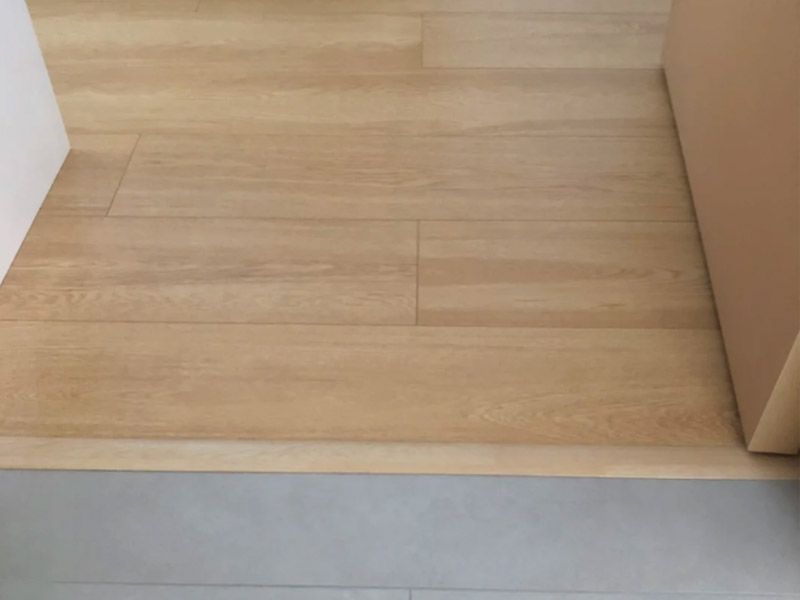
1. Doorways
Doorways are where one space hands over to another, and that’s exactly where threshold strips feel at home. They sit right at that moment of transition, keeping the change neat and intentional.
2. Transition from Living Room to Bedroom
Between the living room and bedroom, the mood shifts—one open and social, the other quiet and personal. A threshold strip sits right at that boundary, keeping the transition clean and subtle, so the change feels natural, not like a break in the flow.
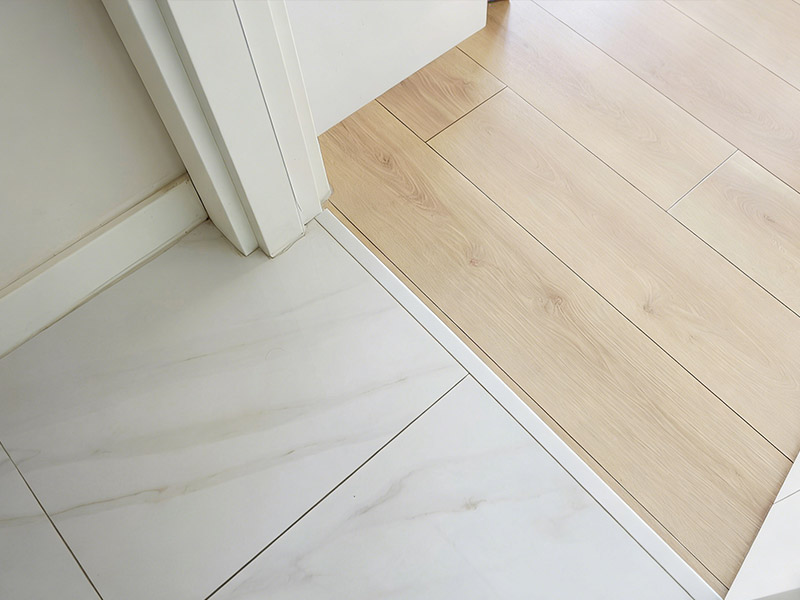
3. Wood to Tile Transitions
Where wood meets tile, the contrast is both visual and physical—warm against cool, flexible against rigid.
A threshold strip sits between them, easing that meeting point and keeping edges protected.
4. Entryways / Exterior Doors
At entryways and exterior doors, threshold strips do more than guide your step—they act as a first line of defense.
They seal out drafts, block dust, and smooth the transition from outside to in, making every entrance feel purposeful and polished.
5. Bathrooms/Kitchens
In bathrooms and kitchens, moisture is always nearby, and floors meet at different heights. Threshold strips quietly manage the change, protect vulnerable edges, and keep water or spills from sneaking under the floor, turning a wet spot into a safe, seamless step.
Types of Threshold Strips
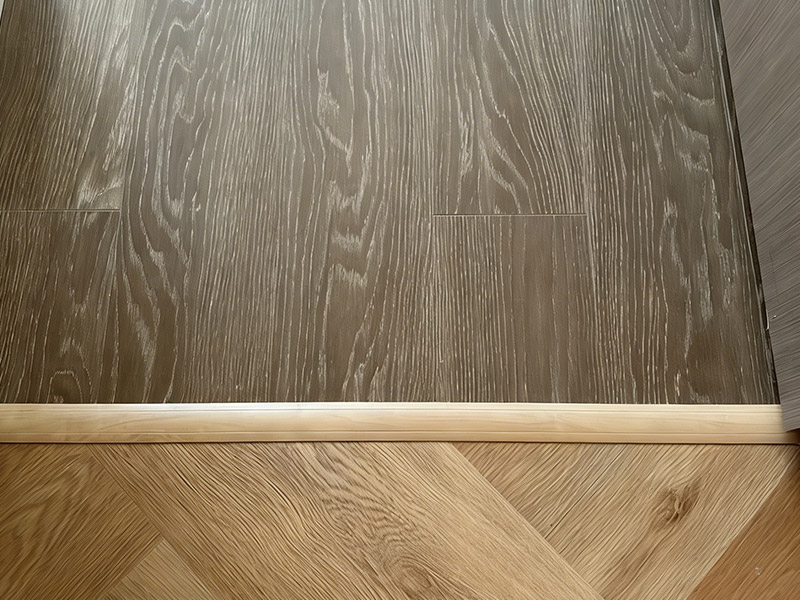
1. Flat Threshold (Same Height Floors)
A flat threshold is perfect when floors are level and aligned. Simple, low-profile, and understated, it creates a clean, seamless transition that feels effortless underfoot—subtle enough to go unnoticed, yet finishes the space with quiet elegance.

2. Reducer / Ramp Threshold
A reducer, or ramp threshold, is the solution for uneven floors.
It gently eases the height difference, turning a sharp edge into a soft slope. Walk across it, and the step feels natural—safe, smooth, and effortlessly connected.

3. End Cap / Edge Threshold
An end cap, or edge threshold, neatly finishes the floor edge. It doesn’t extend beyond the surface—it simply frames it, protecting vulnerable edges while giving the space a polished, intentional look that feels complete and deliberate.

4. Heavy-Duty / Exterior Threshold
A heavy-duty or exterior threshold is designed to withstand the elements. Waterproof, dustproof, and pressure-resistant, it stands guard at entrances and high-traffic areas, keeping floors safe, clean, and intact while making every step feel solid and secure.
Materials: What Are Threshold Strips Made Of?
PVC: Waterproof, wear-resistant, cost-effective
Aluminum/Stainless Steel: High strength, modern style
Wood: Strong natural feel, but more delicate
Material | Key Features | Best Use Cases | Pros | Cons |
PVC | Waterproof, abrasion-resistant, cost-effective | Kitchens, bathrooms, high-traffic areas | Affordable, easy to install, low maintenance | Less premium feel |
Aluminum / Stainless Steel | High strength, modern style | Commercial spaces, modern interiors | Durable, sleek, long-lasting | Can feel cold underfoot, may scratch |
Wood | Strong natural feel | Living rooms, bedrooms, interior spaces | Warm, natural look, blends with wood flooring | Sensitive to moisture, requires care, and may dent |
Do You Really Need One?
Sometimes it feels like a small detail, and you might wonder if a threshold strip is really necessary. Most of the time, it is. It smooths transitions, protects edges, and keeps floors stable. Skip it only if everything lines up perfectly—otherwise, it’s the quiet piece that keeps your space feeling complete.
How to Choose the Right Threshold Strip?
1. Consider the height difference
The tiniest step underfoot can feel like a stumble without the right strip. Look at how high one floor sits compared to the other — the right threshold gently eases that change so every step feels intentional, not awkward.
2. Consider the flooring type
Hardwood, tile, vinyl — each material has its own rhythm and texture.
Match your threshold to the flooring’s personality so they meet gracefully, not clash. It’s less about rules and more about two surfaces learning to speak the same visual language.
3. Consider the area of use
Busy hallways, entryways, wet kitchens — every spot has its own traffic story. Choose a threshold that’s tough where feet are many, and water is near, and softer where style and warmth matter most. It’s about fit, function, and flow.
4. Consider the installation method
Some strips click in place, others glue or screw down. Think about who’s installing and how permanent you want it to be. A good threshold should feel like it belongs — not like it was hard to put there or hard to get out later.
Conclusion
A threshold strip may be small, but it quietly shapes how a space feels. Get it right, and the transition between floors is seamless, edges are protected, and the room just… clicks. Easy to miss, yet it’s the detail that makes everything feel truly finished.
Struggling with tricky floor edges or unsure which transition strip fits best?
CREATEKING, a source manufacturer specializing in floor and wall edging, offers expert guidance and customizable solutions. Sometimes, getting the edge right is all it takes to make a space feel complete.
FAQS
Q1: What exactly is a threshold strip?
A1: A threshold strip is a decorative transition piece placed where two floors meet — like wood and tile — to bridge gaps, protect edges, and make the change feel smooth and intentional.
Q2: Do you need a threshold strip between wood and tile?
A2: In most cases, yes — it creates a clean, safe connection between different materials. If floors are perfectly aligned and level, you might skip it, but that’s rare in real homes.
Q3: Can you install a threshold strip yourself?
A3: Absolutely. With a bit of measuring and the right tools, many homeowners DIY it. Just ensure the strip is level and secure so the transition feels natural.
If you have any installation problems, you can seek help from CREATEKING's expert team.
Q4: How do threshold strips help with height differences?
A4: They bridge uneven surfaces with a slight slope or profile, turning what could feel like a “step” into a smooth walk‑through.
Q5: What materials are threshold strips made of?
A5: Common materials include PVC, wood, and aluminum — each with its own look and durability level. Pick one that complements your floors and the traffic it sees.
Q6: Are threshold strips just functional, or can they be decorative too?
A6: Both. Threshold strips protect and ease transitions, but they also can enhance a room’s visual flow, acting as a subtle design detail that ties spaces together.
Q7: Should threshold strips be used at every doorway?
A7: They’re especially helpful at doorways where floor types change, or heights differ — for safety and aesthetics — though same‑height, continuous floors might not need one.
Q8: Can a threshold strip reduce tripping hazards?
A8: Yes! By smoothing the gap between floors, threshold strips reduce the chance of catching a toe on an uneven edge, especially in high‑traffic areas.
Q9: Can a threshold strip help with the expansion and contraction of wood floors?
A9: Definitely. Wood expands and contracts with humidity and temperature, and a threshold strip gives that movement space while keeping the joint tidy.
Q10: What happens if you skip a threshold strip?
a10: Without one, you might see chipped edges, uneven walking surfaces, or gaps that collect dirt — little details that can add up over time.